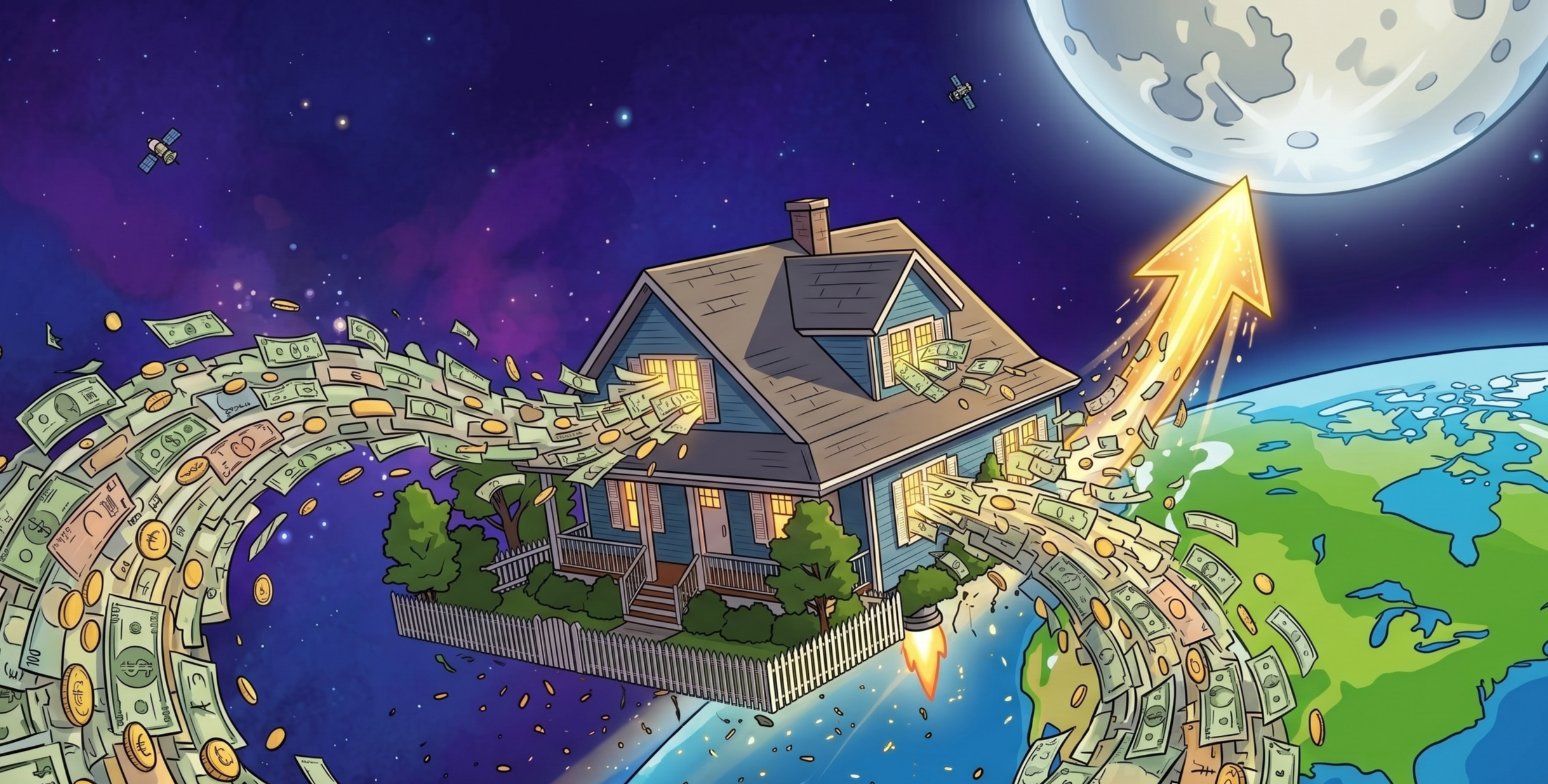

If you searched “sell home appreciation,” you are probably asking whether future appreciation can help you today — not whether you have to sell your home.
Home appreciation is the increase in a home’s value over time. It can come from local demand, improvements, limited housing supply, neighborhood change, and broad market conditions. It can also slow down or reverse, which is why homeowners should treat appreciation as a possibility, not a promise.
Many homeowners first think about familiar ways to use home value: a HELOC, a cash-out refinance, a personal loan, a reverse mortgage, or a sale. Each path has tradeoffs. Some involve new debt, some change your mortgage, and some make sense only for a specific stage of life.
PREESH’s product is a Future Appreciation Participation Agreement, or FAPA — a type of shared appreciation plan (sometimes shortened to SAP). A FAPA is not a loan. It is an agreement tied to a share of future appreciation, with terms that vary by property and applicant.
This guide explains home appreciation, what can affect it, how homeowners may think about future appreciation before selling, and what to ask before choosing any option.
What is home appreciation?
Home appreciation means a home is worth more than it was at an earlier point in time. A simple definition is this: appreciation is the change in market value between two dates, usually measured by an appraisal, a sale price, or a market estimate.
For example, a home purchased for $400,000 might later be valued at $460,000. The $60,000 difference is appreciation before any transaction costs, repairs, taxes, or agreement terms. That number is not automatically cash in hand. It is a value change that becomes concrete only when a homeowner sells, refinances, qualifies for another product, or enters an agreement that references future appreciation.
That is why “sell home appreciation” can be misleading. You generally are not selling a separate object called appreciation. You are deciding whether an option lets you use, share, borrow against, or wait for value that may or may not exist in the future.
What affects a home’s value over time?
A home’s value can move because of both the property itself and the market around it. Location, school boundaries, nearby jobs, transportation, zoning, local housing supply, and buyer demand all matter. So do interest rates, insurance costs, taxes, and the general affordability of homes in the area.
The property’s condition matters too. A well-maintained roof, functional systems, usable layout, and clean title history can support value. Deferred maintenance can work the other way. Some renovations raise resale appeal, while others are personal choices that may not return what they cost.
Home appreciation can never be assumed. Even strong markets can pause. A careful homeowner looks at a range of possible outcomes and asks how an option works if value rises, stays flat, or falls.
Can homeowners access future appreciation before selling?
Sometimes, yes — but the method matters. A homeowner may look at a HELOC, cash-out refinance, personal loan, reverse mortgage, sale-leaseback, or a shared appreciation plan. These are different tools with different costs, obligations, and eligibility rules.
A shared appreciation plan is one way to think about future appreciation without requiring a traditional refinance. In PREESH’s case, the product is FAPA, which is designed around future appreciation rather than monthly debt payments. The exact formula, share, triggers, and responsibilities belong in the final agreement, not in a generic article.
Before choosing any route, start with the reason you need funds or flexibility. A short-term expense, a long-term retirement plan, a home repair, and a debt-consolidation goal can all point to different answers. The strongest homeowner is the one who compares the real terms side by side.
Assume a home is valued at $400,000 today. In one possible future, the home is valued at $460,000 after several years, creating $60,000 of appreciation — a 15% increase before costs and contract terms. In another possible future, the home is valued at $390,000, so there is no positive appreciation from the starting point. An agreement tied to future appreciation would need to explain exactly how those different outcomes are calculated.
This is a simplified illustration of the mechanics — not an offer, a quote, or a prediction of your results. Your actual numbers come from your signed agreement.
What is a FAPA and how does it fit?
A FAPA is a Future Appreciation Participation Agreement. In plain English, it is PREESH’s form of shared appreciation plan: the agreement references a home’s future appreciation and defines how participation is calculated if a settlement event occurs under the contract.
FAPA fits best as a comparison point when a homeowner wants to understand options beyond selling or taking on a new traditional loan product. It may be relevant for homeowners who want to stay in the home while reviewing ways to use future appreciation, subject to qualification and final terms.
For more background, see PREESH’s shared appreciation plan explainer. If the concept seems relevant, the next practical step is to review specific terms, because small differences in valuation, caps, fees, and settlement triggers can change the outcome.
Is a FAPA a loan?
No. A FAPA is not a loan. That distinction matters because the comparison set includes several products that are loans, and homeowners should not blend them together.
HELOC. A HELOC is a revolving credit line secured by your home. It may have a draw period, variable rates, repayment terms, and lender requirements. It can be flexible, but the borrower is taking on debt.
Cash-out refinance. A cash-out refinance replaces the existing mortgage with a new one that is larger than the prior balance. It can provide cash at closing, but it may also change the interest rate, term, closing costs, and total mortgage obligation.
Personal loan. A personal loan is usually unsecured debt with a fixed repayment schedule. It can be faster than some home-based options, but the rate, payment, and approval terms depend on the lender’s criteria.
Reverse mortgage. A reverse mortgage is a specialized product generally associated with older homeowners and detailed rules. It deserves careful review with qualified advisors and family members before any decision.
By contrast, PREESH’s option is tied to future appreciation under the agreement. That does not make it automatically better or worse. It means the tradeoff is different, and the homeowner should compare formulas, timing, obligations, and settlement events instead of looking only at a headline amount.
What should homeowners ask before choosing an option?
Start with valuation. Who determines the starting home value? Is it an appraisal, automated estimate, broker opinion, or another method? Then ask how future value is measured and what happens if the parties disagree.
Next, ask about the formula. What share of appreciation is used? Are there caps, minimums, fees, maintenance obligations, or events that trigger settlement? What happens after a sale, refinance, transfer, default under another obligation, or major title issue?
For loan products, compare official disclosures carefully. The Consumer Financial Protection Bureau’s Loan Estimate guide explains how borrowers can review rate, payment, closing cost, and cash-to-close information. For a FAPA, ask for the agreement terms and read how the future appreciation calculation works.
Finally, ask whether the option matches your goal. If the goal is a short repair, a long-term cash-flow plan, or staying put while preserving flexibility, the right answer may differ. A good decision is not the one with the loudest marketing claim — it is the one whose risks you understand.
Sell home appreciation FAQ
Is home appreciation certain?
No. Home appreciation can never be assumed, even in areas that have grown quickly in the past. Local jobs, rates, supply, insurance costs, buyer demand, property condition, and broader economic changes can all affect value. A home may rise, stay flat, or fall over a given period. Any article, calculator, or example should be treated as education, not a promise. If an agreement references future appreciation, read the terms for how the starting value, ending value, costs, and settlement events are calculated.
Can I access future appreciation before selling?
Some homeowners explore ways to use future appreciation before a sale, but the route depends on eligibility, property details, and personal goals. Traditional choices may include a HELOC, refinance, personal loan, or reverse mortgage. A shared appreciation plan is another category, and PREESH’s product in that category is FAPA. Each option has a different structure. Before deciding, compare what you receive, what you may owe or share later, what events trigger settlement, and what responsibilities remain yours as the homeowner.
Is a FAPA a loan?
No. A FAPA is not a loan. It is a Future Appreciation Participation Agreement tied to a share of future appreciation under the contract. That does not remove the need for careful review. Homeowners should still ask how the starting value is set, how future value is measured, what costs or caps may apply, and when settlement may be required. The cleanest comparison is not “loan versus free money.” It is a side-by-side review of obligations, risks, and possible outcomes.
What happens if my home value goes down?
The answer depends on the agreement or product you choose. With loan products, repayment duties may remain even if home value falls. With a future-appreciation agreement, the contract should explain how a lower ending value is handled, including any definitions, fees, minimums, or settlement rules. Do not assume the result from a summary page. Ask for the actual language, then review it against scenarios where the home rises, stays flat, or declines. Planning for the downside is part of being informed.
How should I compare a FAPA with other options?
Compare purpose, cost, timing, obligations, and downside scenarios. A HELOC or refinance may make sense for homeowners who want a familiar credit product and are comfortable with its terms. A reverse mortgage may be relevant for a specific age group and planning need. A FAPA may be worth reviewing if you are focused on future appreciation and want to understand a non-loan structure. The best choice is personal, so slow down, read the documents, and ask how each option works if plans change.
The bottom line
“Sell home appreciation” is usually shorthand for a bigger question: can the future value of a home matter before the homeowner sells? The answer is sometimes yes, but the details decide whether an option is useful, costly, risky, or simply not a fit.
PREESH’s FAPA is one way to review future appreciation through a shared appreciation plan structure. It is not a loan, it is not a guarantee, and it should be compared with the obvious alternatives. The strongest homeowner is the informed homeowner.
PREESH FINANCIAL LLC, 30 N Gould St STE N, Sheridan, WY 82801. This article is for general information only and is not an offer, commitment, or solicitation. A FAPA is not a loan. Offer terms vary by property and applicant. Consult the final agreement for complete terms and conditions.